| Module | Summary | Topic(s) | Partner | Total CEUs | Ethics CEUs | Supervision CEUs | Launched | Last Updated | hf:tax:pa_moduletype | hf:tax:pa_ceus_total | hf:tax:pa_ceutype | hf:tax:product_tag | ||
|---|---|---|---|---|---|---|---|---|---|---|---|---|---|---|
 | Format: Interactive Video
(6) $9.99 | In this interview, Dr. Brian Iwata reflects on his path into behavior analysis, shaped by his graduate studies at Florida State University and early practical experiences. He discusses his pioneering work on self-injurious behavior and functional analysis, which transformed treatment approaches for developmental disabilities. Dr. Iwata also emphasizes the value of empirical research and the potential of behavior analysis to address broader societal issues. Note: This video is from YouTube and does not have captions that work with our site. However, a complete transcript is embedded within the video for easy access while viewing.
| View product details → | Applied Behavior Analysis, Assessment, Functional Analysis, History, Profession | 1 | May 24, 2025 | video | 1 | general | applied-behavior-analysis assessment functional-analysis history profession | ||||
 | Format: Article Quiz
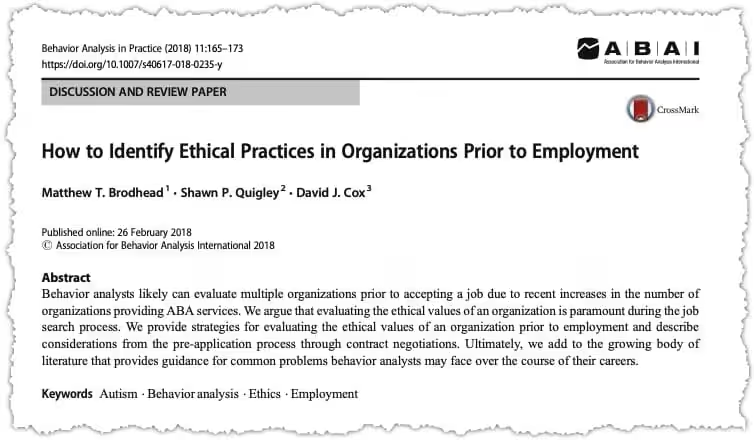
(8) $9.99 | Read the following article and pass a 5-question quiz on it: Brodhead, M. T., Quigley, S. P., & Cox, D. J. (2018). How to identify ethical practices in organizations prior to employment. Behavior Analysis in Practice, 11, 165-173. | View product details → | Applied Behavior Analysis, Autism, Employment, Ethics Code, Profession, Professionalism | 1 | 1 | May 26, 2025 | Dec 8, 2025 | articlequiz | 1 | ethics | applied-behavior-analysis autism employment ethics-code profession professionalism | ||
 | Format: Interactive Video
(5) $4.99 | In an interview, Bob Bailey shares his unique path into behavior analysis, beginning as a chemist and biologist drawn to animal behavior. He discusses his pioneering role in animal training, including directing the US Navy Dolphin Program and collaborating with the Brelands. Bailey highlights the value of data, experimental design, and innovations like the “Keep going signal” in enhancing training. He urges future trainers to adopt a scientific mindset, collaborate across disciplines, and continue evolving the field. Note: This video is embedded from YouTube and does not have captions that work with our site. However, a complete transcript is available for download and is embedded within the video itself for easy access while viewing.
| View product details → | Animal Training, Applied Science, History, Non-Human Animals, Procedures, Profession | 0.5 | May 26, 2025 | video | half | general | animal-training applied-science history non-human-animals procedures profession | ||||
 | Format: Article Quiz
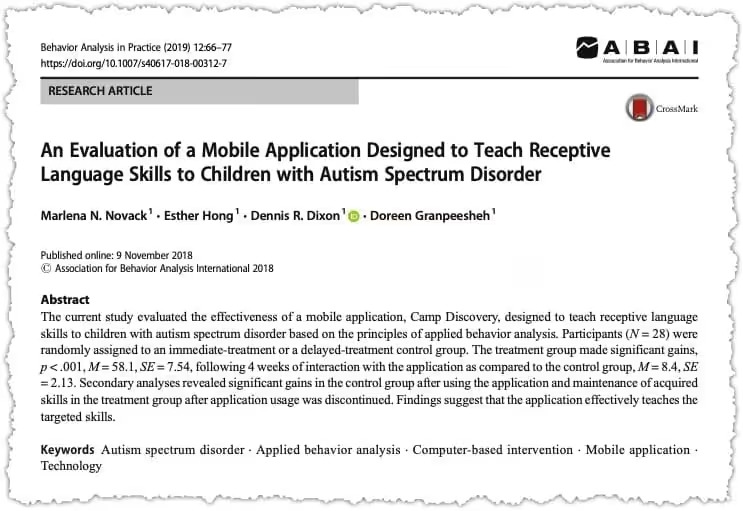
(2) $9.99 | Read the following article and pass a 6-question quiz on it: Novack, M. N., Hong, E., Dixon, D. R., & Granpeesheh, D. (2019). An evaluation of a mobile application designed to teach receptive | View product details → | Applied Behavior Analysis, Applied Science, Autism, Intervention Processes, Neurodivergent, Profession | 1 | May 25, 2025 | Dec 8, 2025 | articlequiz | 1 | applied-behavior-analysis applied-science autism intervention-processes neurodivergent profession | ||||
 | Format: Focus Pack
(0) $24.99 | In 1991, Allen Neuringer published a call for behaviorists to be more humble. He argued that greater humility would be functional in that it would lead to greater collaboration, better research, and more widespread acceptance of behavioral research. In 2022, Kirby and colleagues revisited Neuringer’s call and integrated it with other recommendations by behavior analysts to present a framework of cultural reprocity. This focus pack includes two quizzes based on these articles and a final, integrative quiz that encourages comparison and synthesis. | View product details → | Applied Science, Cultural Humility, Cultural Reciprocity, Ethics Code, Humility, Profession | 2.5 | 2.5 | May 19, 2026 | focuspack | 2-5 | applied-science cultural-humility cultural-reciprocity ethics-code humility profession |
Pro Tip: If you are a returning customer, log in to see what you've already purchased!