Finding the Philosophical Core: A Review of Stephen C. Pepper’s World Hypotheses: A Study in Evidence | 2 BCBA CEUs
$19.99
BCBA CEUs: 2 CEUs
Read the following article and pass a 9-question quiz on it:
Hayes, S. C., Hayes, L., J., & Reese, H. W. (1988). Finding the philosophical core: A review of Stephen Pepper’s world hypotheses: A study in evidence. Journal of the Experimental Analysis of Behavior, 50, 97- 111. https://doi.org/10.1901/jeab.1988.50-97
 19 Star Points (worth a $1.90 discount) when you purchase this product!
Description
To earn credit, you will be required to read the article and pass a 9-question quiz about it. You can retake the quiz as many times as needed, but you will not receive exactly the same questions each time.
Abstract
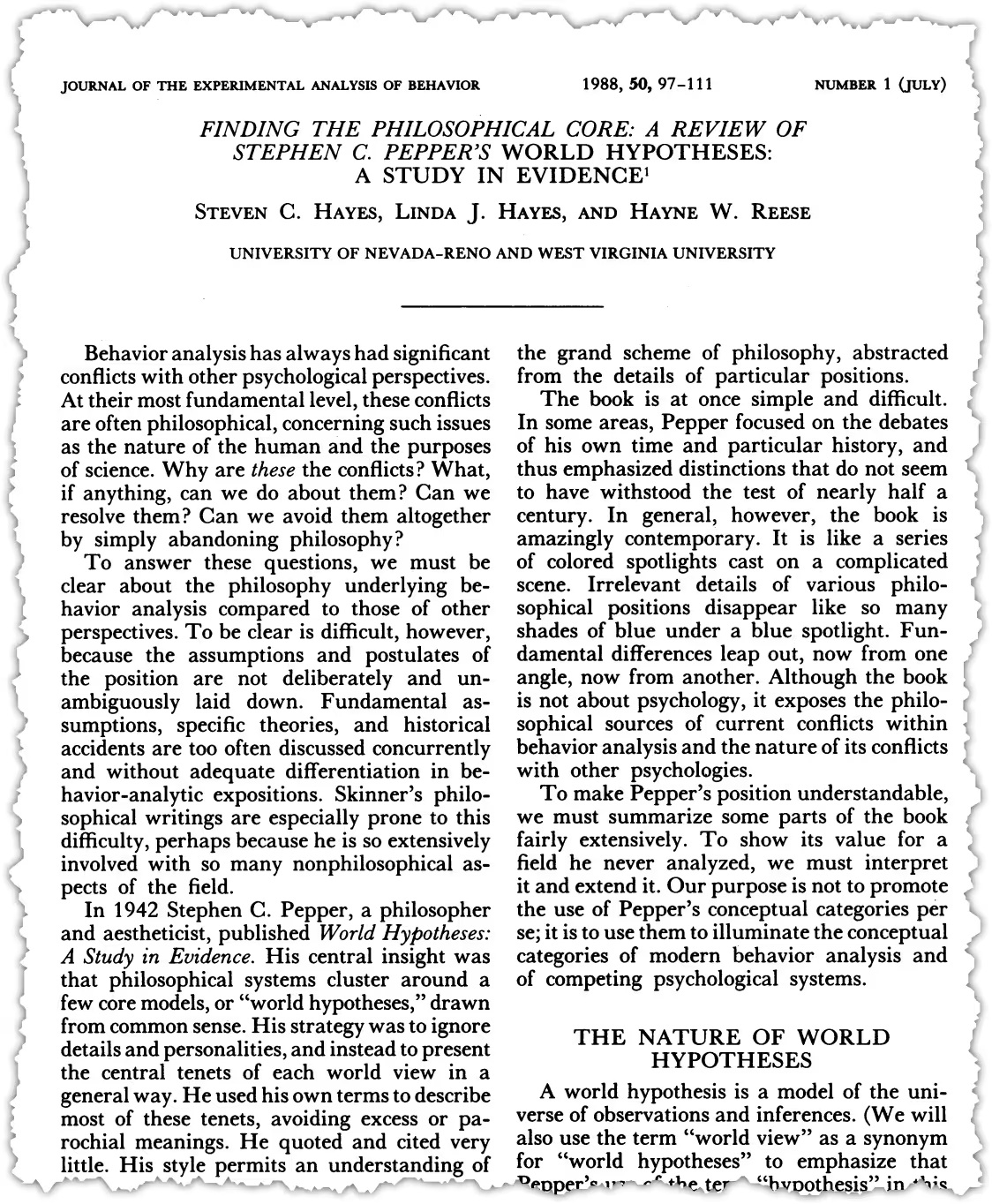
Behavior analysis has always had significant conflicts with other psychological perspectives. At their most fundamental level, these conflicts are often philosophical, concerning such issues as the nature of the human and the purposes of science. Why are these the conflicts? What, if anything, can we do about them? Can we resolve them? Can we avoid them altogether by simply abandoning philosophy? To answer these questions, we must be clear about the philosophy underlying behavior analysis compared to those of other perspectives. To be clear is difficult, however, because the assumptions and postulates of the position are not deliberately and unambiguously laid down. Fundamental assumptions, specific theories, and historical accidents are too often discussed concurrently and without adequate differentiation in behavior-analytic expositions. Skinner’s philosophical writings are especially prone to this difficulty, perhaps because he is so extensively involved with so many nonphilosophical aspects of the field. In 1942 Stephen C. Pepper, a philosopher and aestheticist, published World Hypotheses: A Study in Evidence. His central insight was that philosophical systems cluster around a few core models, or “world hypotheses,” drawn from common sense. His strategy was to ignore details and personalities, and instead to present the central tenets of each world view in a general way. To make Pepper’s position understandable, we must summarize some parts of the book fairly extensively. To show its value for a field he never analyzed, we must interpret it and extend it. Our purpose is not to promote the use of Pepper’s conceptual categories per se; it is to use them to illuminate the conceptual categories of modern behavior analysis and of competing psychological systems.
Additional information
| Type of CEU | General |
|---|---|
| Format | Article Quiz |
| Total CEUs | 2 |
| Reading Time | 1 hour 37 minutes |
| Publication Date | Jun 24, 2026 |
|---|
Be the first to review “Finding the Philosophical Core: A Review of Stephen C. Pepper’s World Hypotheses: A Study in Evidence | 2 BCBA CEUs”
You must be logged in to post a review.









0 reviews for Finding the Philosophical Core: A Review of Stephen C. Pepper’s World Hypotheses: A Study in Evidence | 2 BCBA CEUs
Customer reviews
No reviews found